What Is Myofascial Release? How It Differs From Deep Tissue

What Is Myofascial Release? How It Differs From Deep Tissue Massage
By Kayla Stroughter, Licensed Massage Therapist LA4848 · Postpartum Doula · Certified Decongestive Therapist
Maybe a friend mentioned myofascial release. Maybe it showed up on a referral from your chiropractor. Now you're wondering what it actually is, and whether it's what your body needs.
I've been doing bodywork for 20 years, and I offer myofascial massage in New Orleans. For the first decade of my career, I worked as a deep tissue and trigger point therapist. I still value that work. But learning myofascial techniques changed how I relate to every body on my table. Here's what I've learned from both sides.
First, what is fascia?
Picture the forest floor. Beneath the leaves runs mycelium, a living web of fine threads that links the trees and plants of the forest to one another. Through it, the forest shares nutrients and sends signals. When you walk through the woods, that pressure travels through living ground that is connected all the way down.
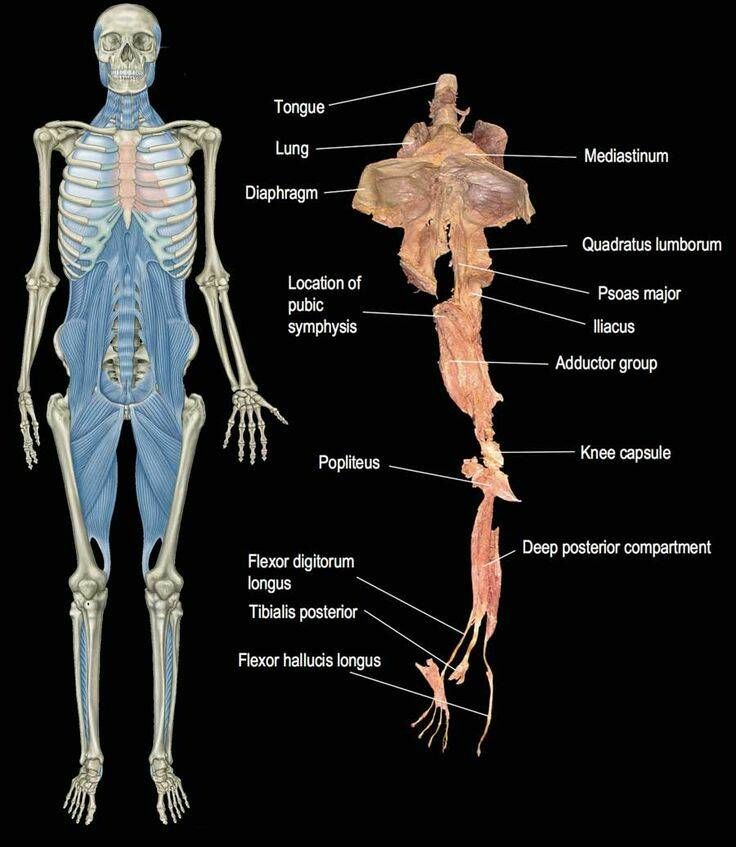
Fascia is your body's version of that web. It's the connective tissue that wraps and weaves through every muscle, organ, nerve, and bone. Your skin, muscle, and nerve cells are all in contact with it. So when pressure or touch meets the body, the fascia feels it and carries that message through the whole system. Mechanical force can travel through this connected tissue even faster than a nerve impulse. It's truly miraculous stuff.
Fascia also gives your body its shape and its freedom. If we were only bones held together by muscles, tendons, and ligaments, we'd move like a stack of blocks on strings. Instead, the body works through tensegrity: a balance of tension and support, where every part is held in relationship to every other. Fascia is what binds it all together, and that's what lets you twist, reach, bend, and carry a sleeping child up the stairs.
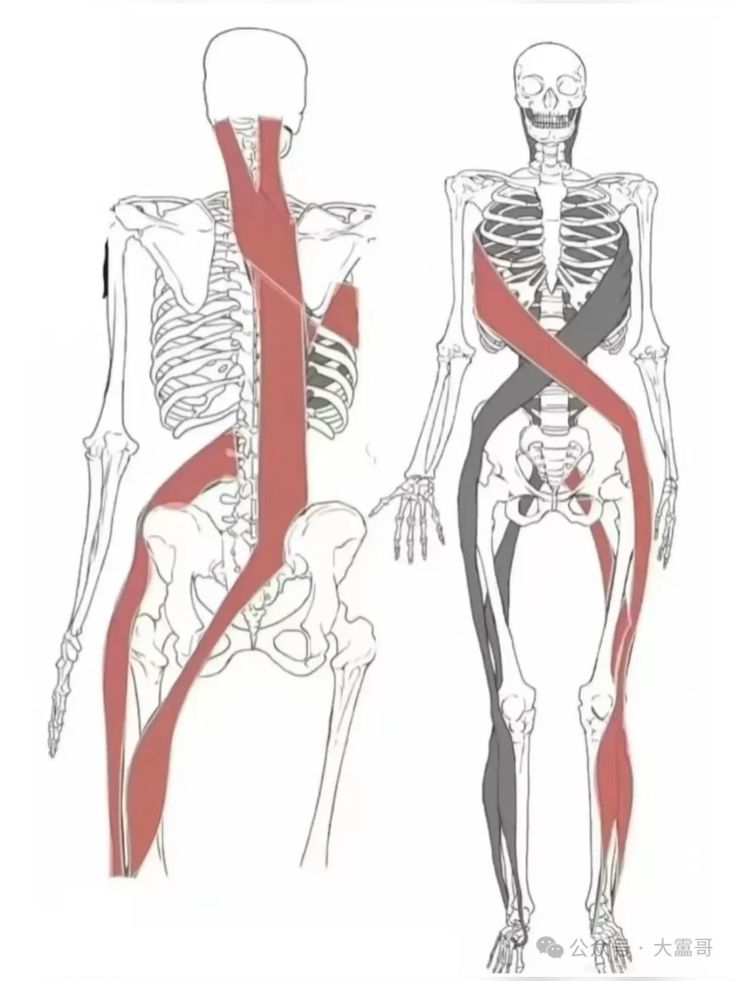
As fascia researchers Bruno Bordoni and Tom Myers put it, "Myofascial chains perfectly reflect the concept of body continuity." (Cureus, 2020)
That's also why tension rarely stays in one place. A tight jaw talks to your neck and shoulders. A guarded belly can pull on your lower back. When I work, I follow those connections, including places that often get skipped, like the abdomen, the front of the hips, and the face.
Two different conversations with the body
Deep tissue massage uses firm, gliding strokes to work through layers of muscle. Many people love it, it has its place, and for years it was the heart of my practice. (If you're still sorting out therapeutic vs. relaxation massage, start with this post.)
Here's the difference as I've come to understand it. Deep tissue often tries to force change. Myofascial work creates the conditions for change. It's a dialogue with the tissue rather than a directive.
In a myofascial session, I slow way down. I often use little or no oil, or an oil with a bit of drag, so I can engage the deeper layers instead of gliding over them. I may hold one spot for two minutes or more, waiting for the tissue to soften and answer. Sometimes I steady one end of the tissue and ease gently in the other direction. Sometimes I bring two points closer together to invite change in more stubborn, dense areas of fascia. When even that doesn't soften the tension in the fascial web, I may use gua sha and cupping to help make space so fluid can move more freely.
My body tells me when I'm forcing
I can feel the difference in my own body. When I slip into forcing change, I start gripping. My shoulders creep up, I clench my jaw and pelvic floor, and I leave the session more tired. That's my cue to slow down. It usually means my mind has drifted toward an outcome instead of staying in the conversation with the body in front of me.
When I'm truly working with the tissue, my body feels the way it does in Qigong: stable, supported, and relaxed. That's when the best work happens, for both of us.
The places most massages skip
Most massages focus on the back, neck, shoulders, arms, and legs. The belly, ribs, chest, front of the hips, inner thighs, jaw, and scalp are often left out. Yet most of us sit far more than our bodies were designed to, and that shortens and tightens the front of the body. Skipping the front is like skipping the back entirely.
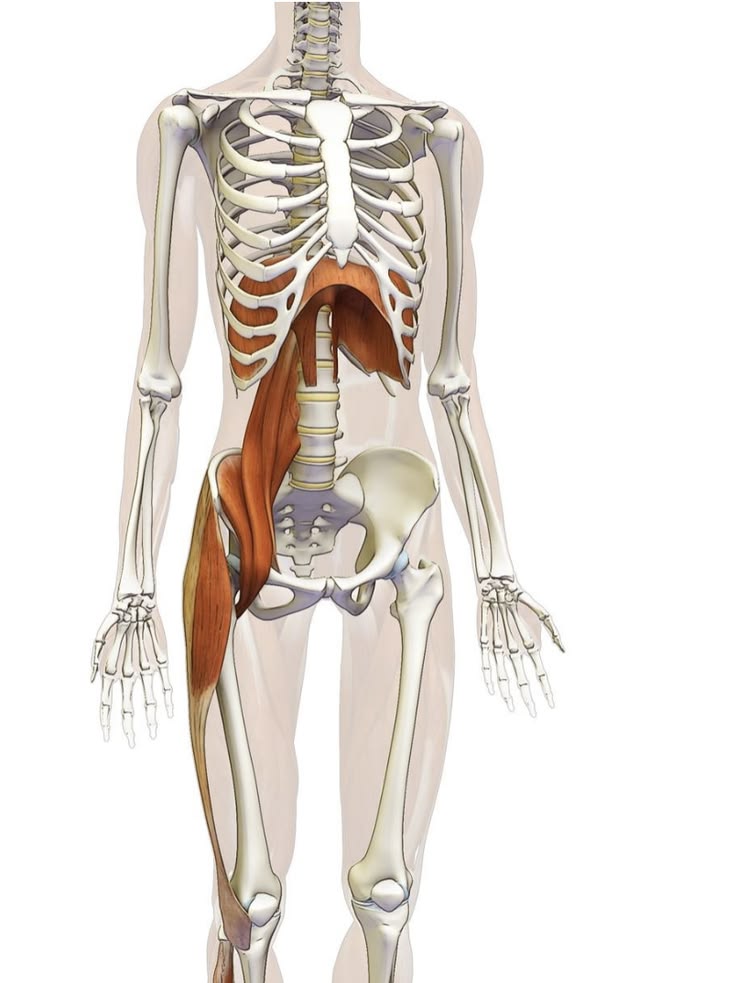
The belly, ribs, and chest. Your diaphragm, your main breathing muscle, attaches to the lower ribs and spine. When this area is tight, breath gets shallow, and the back, hips, and pelvic floor pick up the slack. After diaphragm work, clients often notice their ribs and shoulders move more freely, with less back, hip, and shoulder pain. During and after pregnancy and birth, the belly and the ribs that support it go through so much, yet they are rarely touched and tended.
The front of the hips and inner thighs. Your hip flexors link your spine to your legs, and your inner thighs connect into the pelvis. Sitting, pregnancy, and carrying children can all tighten them. Clients are often surprised by how much these areas contribute to their back pain. Releasing them can also ease chronic tension in the pelvic floor. I've had clients with pelvic floor prolapse report less internal tugging after external work on these muscles. (This is all external work. I don't do internal pelvic floor therapy.)
The jaw, face, and scalp. Many of us clench when we're stressed or focused, and that tension travels into the neck, shoulders, and head. For TMJ, I also offer intraoral massage, working the jaw and tongue muscles from inside the mouth.
Before every session, we talk through your treatment plan together. For most clients, these areas belong in it.
What myofascial release feels like on the table
You may feel a gentle spreading warmth or a mild burning at the skin, and some spots may feel tender. Most people find it easier to breathe into a sustained hold than to brace through repeated heavy strokes.
Much of what I meet on the table is guarding. When you sprain an ankle, your body tightens around it to protect it, and that's wise. But once the ankle heals, the guarding often stays. You keep favoring that side and bracing without knowing it, and part of healing is teaching the body it's safe to let go.
We guard in other ways too. A hard season, or fear that is prolonged or unconscious, can draw the shoulders up and set the jaw, and over time that bracing can become the shape we live in. Slow, attentive touch gives the body a chance to notice the pattern and choose something softer.
Sometimes emotion comes up as that happens. It can arise in Qigong, in meditation, or on a walk, too. Whenever we slow down and soften, feeling has room to move. (If it comes during a session, you're welcome to let it.)
Which one is right for you?
More pressure doesn't mean better work. The right touch depends on the body in front of me. A powerlifter's dense muscle needs something very different from a hypermobile body whose nervous system is already working overtime.
I think of one client with Ehlers-Danlos syndrome, a condition that causes joint hypermobility. Even with her wide range of motion, her muscles were chronically tight, working hard to steady her joints. Deep tissue work would have overwhelmed her nervous system. With slow myofascial work and almost no oil, I could feel her tissue shift from dense and guarded to soft and quiet.
Bodies in tender seasons often respond especially well to this slower approach: postpartum, after surgery, or with a sensitive nervous system.
Myofascial massage in New Orleans: how I work
Myofascial work is the foundation of nearly every session I offer at Cycles of Becoming. Woven through it are my other trainings: craniosacral work, lymphatic techniques, Thai massage, and years of Qigong and yoga practice. Deep tissue still has a place when the body asks for it.
Each of these taught me something about listening. Together, they let me meet the body in front of me instead of following a routine.
One small thing to try today
Most people think stretching is fascia work. Fascia responds better to slow, sustained pressure and to springy, varied movement.
Try this: lie on the floor with a soft, squishy ball under a tender spot in your mid-back. Choose one with real give (like the Coregeous ball), not a tennis or lacrosse ball. Breathe slowly and let your weight sink. Stay for two minutes and notice whether the tissue softens.
Save the foam roller for larger muscle groups, like those of the back and shoulders. On the belly and ribs, an area that's crucial for mobility throughout the whole body, it can be too harsh and cause the body to guard.
Come to the table
If you're in New Orleans and your body has been asking for slower, more attentive care, I'd be honored to work with you.
→ Book a myofascial massage session at Cycles of Becoming
If you're farther away, I hope this gives you language for your next conversation with a bodyworker.
This post is for educational purposes and isn't medical advice. If you have a health condition, are pregnant, or are recovering from surgery, talk with your care provider about what's right for you.
Sources
Bordoni B, Myers T. "A Review of the Theoretical Fascial Models: Biotensegrity, Fascintegrity, and Myofascial Chains." Cureus. 2020;12(2):e7092.
Wang N, Tytell JD, Ingber DE. "Mechanotransduction at a distance: mechanically coupling the extracellular matrix with the nucleus." Nature Reviews Molecular Cell Biology. 2009;10:75–82.